Borrowed Shine: Why Smart Artists Are Building Careers One Feature at a Time
For a long time, the conventional wisdom went something like this: you work on your craft, build your catalog, release your music, and eventually — if you're good enough and lucky enough — people find you. The solo grind was the grind. Features were something you earned after you'd already made it.
That logic has been quietly dismantled over the last several years. Right now, some of the most calculated career moves happening in music aren't solo releases at all. They're guest verses. They're hooks on somebody else's track. They're co-signs that drop an artist into a fanbase they'd have taken years to reach on their own.
The feature economy is real, and if you're not thinking about it, you might be leaving one of your biggest career levers sitting on the table.
How Features Actually Build Fanbases
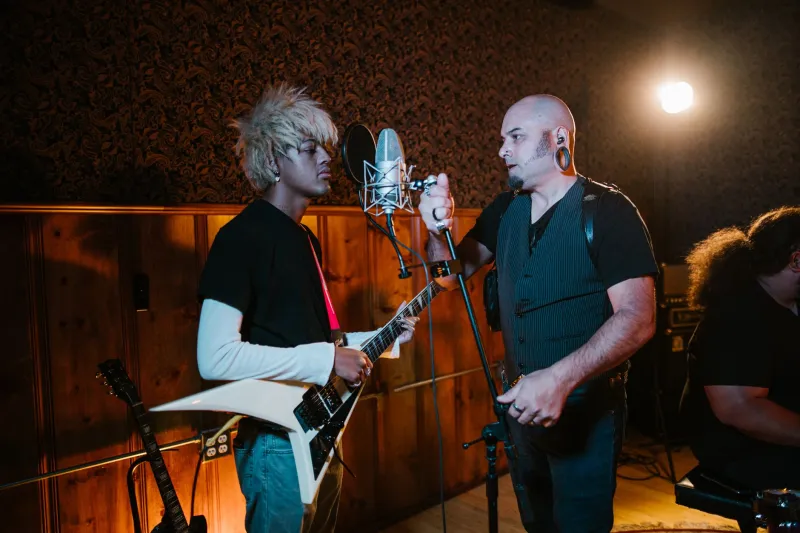
Here's the fundamental mechanic at play: when you appear on someone else's track, you're not just adding to a song — you're auditioning for their audience. If a listener already trusts and loves Artist A, and Artist A brought you in, you walk in with a level of credibility you didn't have to earn from scratch. That's not a small thing.
Look at what a single feature did for certain careers. Before Cardi B had a solo deal locked in, she was building buzz through guest appearances that showed New York exactly what she was capable of. Chance the Rapper used collaborative projects and features — including his work on Kanye's The Life of Pablo — to cement himself as a must-listen voice at a national level. More recently, artists like Fridayy built significant streaming momentum through features before dropping solo projects to audiences that were already warmed up.
The pattern is consistent: a well-placed feature can compress years of audience-building into a single song cycle.
The Unwritten Rules of Feature Negotiations
Okay, so features are powerful. But getting them — and getting them right — requires understanding a set of norms that aren't written down anywhere but very much exist.
Reach up, but not too far. The most effective features happen between artists who are close in trajectory. An artist with 50,000 monthly listeners cold-approaching someone with 5 million is almost always going to get ignored. A better play is identifying artists who are two or three steps ahead of you, who share a genuine sonic or cultural overlap, and building a real relationship first. Collaboration should feel natural, not transactional.
The verse has to earn its spot. This one seems obvious, but it's worth saying plainly: if you get on someone's song and you don't show out, the feature works against you. Audiences are paying close attention to whether the guest adds something or just takes up space. Come correct or don't come at all.
Understand the business before you agree to anything. Feature deals vary wildly. Some are pure trade-outs — you hop on mine, I'll hop on yours. Others involve upfront fees, points on the back end, or promotional commitments. Emerging artists often undervalue their contribution and agree to terms that don't serve them. Know what you're bringing to the table before you sign anything.
Timing and rollout matter. Being on a song is one thing. Making sure your name is visible in the rollout — in the title, in the press, in the social promotion — is a separate negotiation. If your name isn't in the featured artist credit on streaming platforms, you're losing a significant chunk of the algorithmic and discovery benefit.
What Streaming Has Done to the Feature Game
The streaming era has fundamentally changed the math around features in a few important ways.
First, the discovery mechanics on platforms like Spotify actually reward collaborative releases. When a song features two artists, it can appear on the algorithmic playlists and radio stations for both of them — effectively doubling the organic reach without doubling the promotional spend. That's a structural advantage that didn't exist in the physical or download era.
Second, features now live forever in a way they didn't before. A guest verse on a mixtape used to have a shelf life. Now, every song on every streaming platform is evergreen. A feature you did two years ago can still be the first thing a new listener hears from you today, which means your catalog of guest appearances is a permanent part of your brand.
Third — and this is underappreciated — the feature credit system on streaming platforms creates a searchable discography for your guest work. Fans who love a song can click your name and go directly to your own music. That conversion pathway is direct and immediate in a way that's genuinely new.
Building a Feature Strategy That Actually Works
If you're an emerging artist thinking about how to incorporate this into your career plan, here's a practical framework:
Map your network honestly. Who do you already have real relationships with? Who's in your city, your scene, your genre that you actually vibe with? Start there. Organic features almost always outperform forced ones.
Be selective about where your voice appears. Not every feature opportunity is worth taking. Appearing on a song that doesn't align with your brand can confuse your audience and muddy the story you're trying to tell. Say no when it doesn't fit.
Use features to test sonic directions. Before you commit an entire EP to a new sound, a feature is a low-stakes way to see how your audience responds to something different. It's R&D with a built-in feedback loop.
Think in campaigns, not individual songs. The artists who use features most effectively aren't just collecting guest spots — they're sequencing them strategically. A feature that drops a month before your solo single is a promo tool. A feature that drops six months before your album is an introduction.
The solo path still works. But it's longer and harder than it needs to be if you're not using every relationship and every collaboration as a building block. The smartest artists in the room right now aren't just making music — they're making moves. And sometimes the best move you can make is showing up and killing it on somebody else's record.